


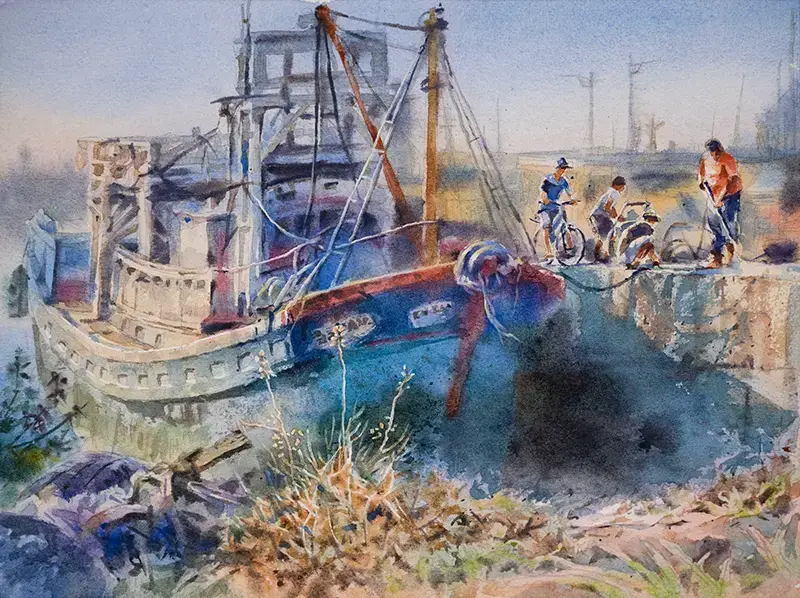
Watercolor Light and Shadow Techniques: 4 Key Methods to Make Your Artwork More Three-Dimensional
Watercolor light and shadow techniques are key to making your artwork lively rather than flat. If your paintings are often described as “flat” or “lacking focus,” the issue usually lies in how light and shadow are handled. This article will guide you to understand the logic of light and shadow, instantly enhancing the three-dimensionality of your work.
I. Light Direction Determines Depth
In watercolor painting, light and shadow do not appear automatically like in photography; the artist must decide them. To create a work with depth, the direction of the light source must be clear.
- Single Light Source:It is recommended to choose an angled light source from the upper left or upper right, as it looks most natural and is easiest to observe.
- Keep Consistent:All objects in the painting should follow the same light source logic to avoid inconsistencies.
II. Basic Logic of Shadow Shape and Intensity
- The areas closest to the object should be the darkest, gradually fading toward the edges to create a natural transition.
- Strong light → sharp shadows; soft light → soft shadows.
- Shadows should connect to the ground to avoid a “floating” effect and enhance the stability of the composition.
III. Differences in Light and Shadow Handling: Still Life vs. Landscape
1. Light and Shadow in Still Life
Pay attention to small areas of reflected light and inter-object shadows. For example, the subtle glow on the edges of fruit can enhance three-dimensionality.
2. Light and Shadow in Landscapes
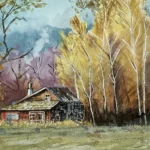
Focus on large areas of light and shadow contrast, such as the sunlit and shaded sides of buildings, or the interplay of light on hills and clouds, to instantly enhance the sense of space.
Practical tipObserve the differences in light and shadow on the same tree in the morning and afternoon to quickly improve your sensitivity to lighting.
IV. Practice Method: One Subject, Multiple Light Sources
Choose an apple and set different light directions (left, right, top, backlight), then draw each one in turn.This kind of “same object, multiple light sources” exercise effectively trains your sense of three-dimensionality and control of visual tension.
Conclusion: Light and Shadow Are the Soul of a Painting's Mood
Mastering light and shadow is not only about making objects look more three-dimensional but also about creating atmosphere and rhythm in the composition. Whether it is still life, figures, or landscapes, watercolor light-and-shadow techniques are fundamental skills you must master.
Further Reading
Recommended Courses
If you want to further improve your light and shadow handling skills, you can refer to our course:“Watercolor Course”




 Chinese
  English
  Japanese
  Korean